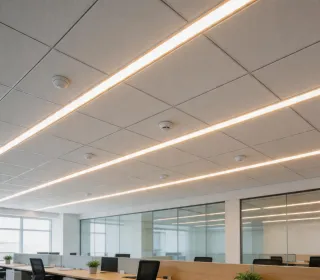
Commercial Offices
Open-office, collaboration, and amenity spaces require consistent glare control, flexible zoning, and practical service access over long lease cycles.
- Typical CCT targets: 3500 K to 4000 K
- 0-10V and occupancy-based zoning
- Retrofit-friendly ceiling coordination
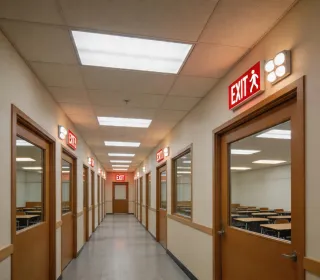
Education Campuses
Classrooms, corridors, and shared spaces benefit from occupancy response, emergency coverage, and maintenance planning that respects school operating hours.
- Daylight harvesting in perimeter zones
- UL 924 paths for egress spaces
- Low-disruption holiday installation windows
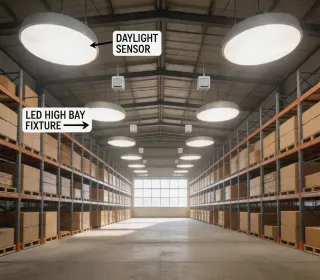
Logistics & Warehousing
High-bay programs are judged on visibility, uptime, and how often lifts must be brought back for service after the initial install.
- High-bay efficacy targets up to 145 lm/W
- Occupancy response by aisle zone
- Driver accessibility affects maintenance labor
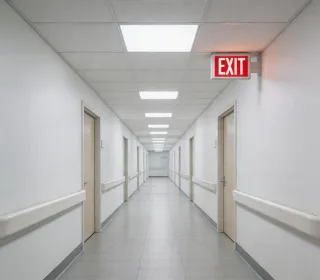
Healthcare Support Areas
Support corridors, storage, and back-of-house spaces require dependable emergency response and clear documentation for facility teams.
- Emergency backup coordination
- Cleanability and visual consistency
- Documentation for phased renovations
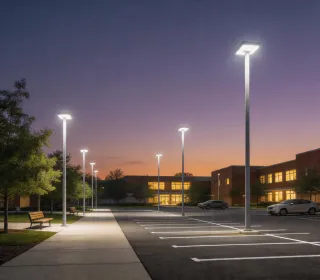
Exterior Campus Sites
Perimeter and pedestrian lighting often involve competing demands between visibility, cutoff control, energy targets, and neighborhood sensitivity.
- IP65-oriented outdoor housings
- Cutoff distribution choices matter
- Time-based and sensor-driven schedules
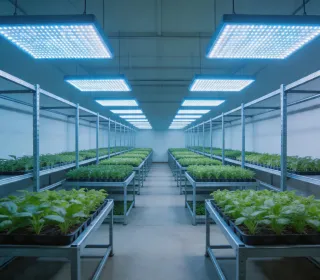
Controlled Environment Growing
Horticultural programs introduce different questions around spectrum strategy, thermal management, and maintenance intervals across dense fixture layouts.
- Spectrum planning affects crop strategy
- Heat load influences HVAC coordination
- Service access changes fixture layout decisions